
Before We Begin…
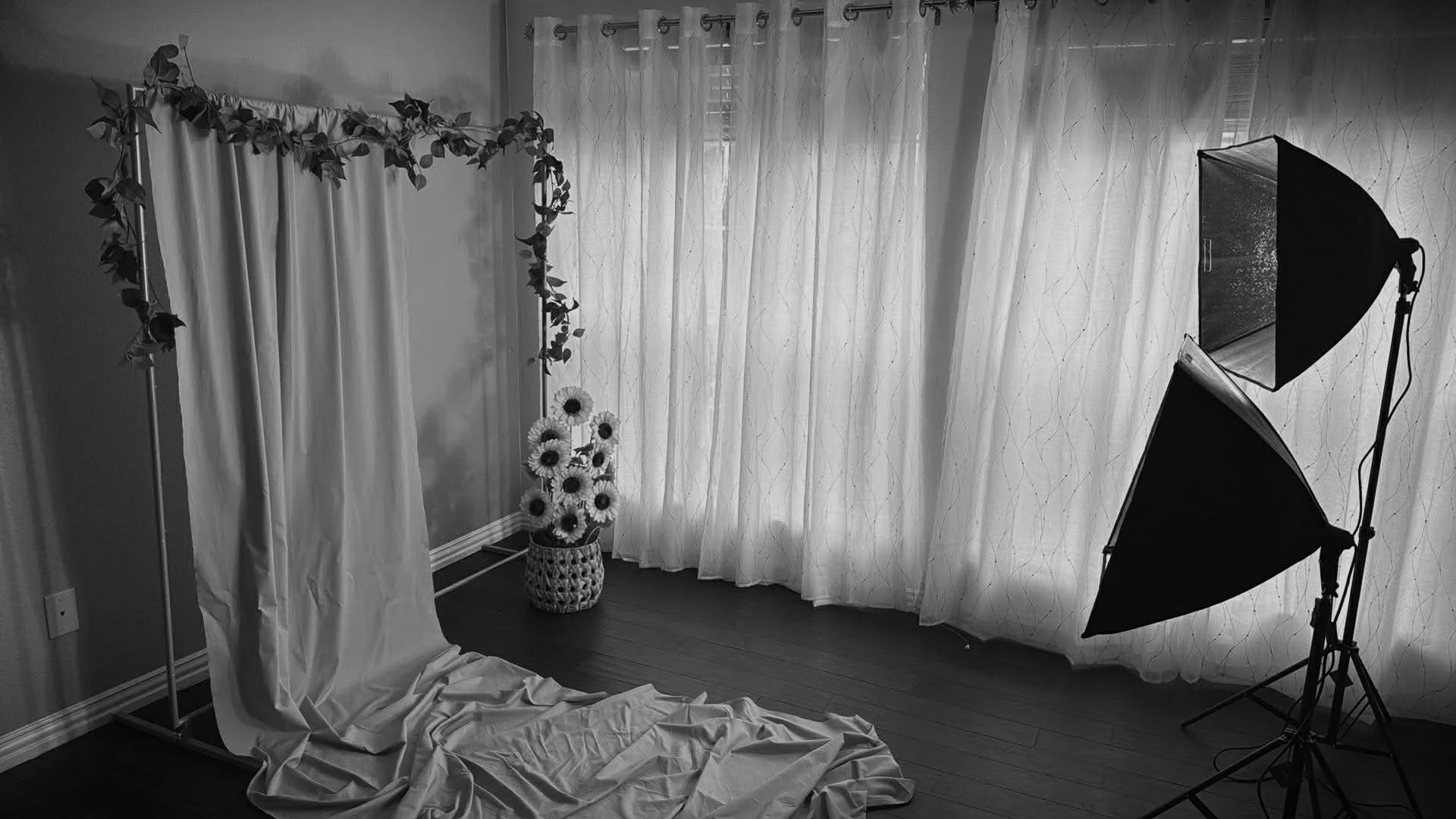
Most photoshoots begin before the camera ever comes up.
They begin at the door.
With a few curious barks from downstairs.
With the pause before climbing the stairs.
By the time we reach the studio, the space is already waiting. The light is set. There’s a chair pulled out. Nothing needs to be rushed into.
We sit for a bit.
Sometimes we talk through practical things — what someone brought, what they’re drawn to, what they’re unsure about. Sometimes the questions wander into softer territory: why they’re here, whether this moment is for themselves or marking something meaningful. I listen to how they answer. To what they say easily, and what they hesitate around.
There’s no right way to arrive.
Some people have done this before. Some haven’t. Some know exactly what they want to show. Some are still figuring out how to take up space in the room. All of that is allowed.
Before anyone changes clothes, before the camera is lifted, there’s already information being shared — in posture, in breath, in the way someone settles into the chair.
When they’re ready, they step into the set. I tell them I’m adjusting my settings. We make a few images that don’t matter. Silly ones. Absurd ones. A face that doesn’t take itself seriously. A moment that breaks the tension open just enough.
I usually start with what I call the cringey poses — the ones that feel unfamiliar, maybe a little awkward. Not because they’re wrong, but because nerves need somewhere to go before they can soften.
And then there’s a moment where I share an image.
They take it in — not as proof of anything, but as a reflection.
A way of seeing themselves without commentary.
Often, the body settles a little more after that.
Not because something changed —
but because nothing had to.
From there, the experience takes over.
From there, the work becomes physical.
I offer direction — small adjustments, intentional movement, the kind of guidance that asks the body to stretch, to arch, to take up space deliberately. It’s attentive, almost meditative. Less about correcting, more about supporting.
I’m paying close attention to details — the fall of fabric, the angle of a shoulder, the way light meets skin — so the person in front of me doesn’t have to. They don’t need to hold the whole picture in their mind. They just need to stay present inside their body.
Photography stops being about getting it right and starts being about staying present. About letting stillness exist inside movement. About trusting that the next moment doesn’t need to be forced.
This is why I think of photography as something you move through, not something you produce.
The images matter — they hold what happened.
But the experience is where the meaning lives.
The feeling of having arrived.
Of having been met where you are.
Of realizing you don’t have to perform your way into being seen.
That’s the part I care about protecting.
The rest follows in its own time.